Real riders. Real cases.
Real outcomes.
Scroll to read their stories
THE INCIDENT
Steve was riding along a country road when a tractor suddenly pulled out of a field directly into his path. He braked hard, lost control and slid into the trailer the tractor was towing. The crash left Steve with serious injuries. Initially, Steve instructed a well-known national “biker specialist” law firm to handle his claim.
THE PROBLEM
The police report referenced skid marks at the scene and suggested that Steve had been speeding. Steve’s previous solicitors instructed an accident reconstruction expert who relied on those skid marks as evidence — concluding that Steve had indeed been travelling too fast. This interpretation significantly weakened Steve’s case.
HOW WE HELPED
When Fergus from The Biker Lawyers reviewed the file, he noticed something important. Steve had been riding a 2014 Suzuki GSX-R1000, a bike fitted with ABS as standard. After confirming with Steve that the ABS system had not been disabled, the issue became clear: Motorcycles with ABS do not leave traditional skid marks. This meant the central piece of “evidence” suggesting speeding was fundamentally flawed. Once this was challenged, the case shifted dramatically — and Steve ultimately secured a settlement well in excess of £100,000. The difference? Real motorcycle knowledge.
CASE INSIGHT
Motorcycle ABS systems rarely leave traditional skid marks — knowledge of bike mechanics changed the outcome of this claim.
THE INCIDENT
Linda, a retired woman, was travelling as a pillion passenger when the motorcycle she was on was involved in a serious crash. Among several injuries, Linda suffered an above-knee amputation.
THE PROBLEM
During the early stages of the claim, our solicitor visited Linda several times to discuss her recovery and the legal process. However, something always felt unsaid. Despite the conversations, there was a clear sense that something was still troubling her. Eventually, Linda explained what was weighing on her most. She believed she would never be able to go pillion on a motorcycle again.
THE RESULTS
For Linda, this loss of connection to motorcycling was devastating. Because our solicitors are both experienced lawyers and long-time motorcyclists, we understood exactly what this meant to her. We were able to reassure Linda that many people with limb loss continue to ride or travel as pillion passengers. We also introduced her to the National Association for Bikers with a Disability (NABD), a charity that supports disabled riders. With the right advice, support and community, Linda was able to look at her future very differently. Her claim ultimately settled for over £1,500,000, providing the financial security she needed to rebuild her life.
CASE INSIGHT
For many riders, the emotional impact of losing mobility can be as significant as the physical injury.
THE INCIDENT
Jim was riding along a dual carriageway when a truck changed lanes and collided with him. He suffered multiple injuries, including severe damage to his lower left leg.
THE PROBLEM
Over the following 12 months, Jim underwent extensive treatment while doctors attempted to save his leg. The NHS surgeons explored every possible option, but the recovery remained uncertain. Jim faced a difficult choice — continue with attempts to save the leg, or consider amputation and begin rehabilitation sooner.
HOW WE HELPED
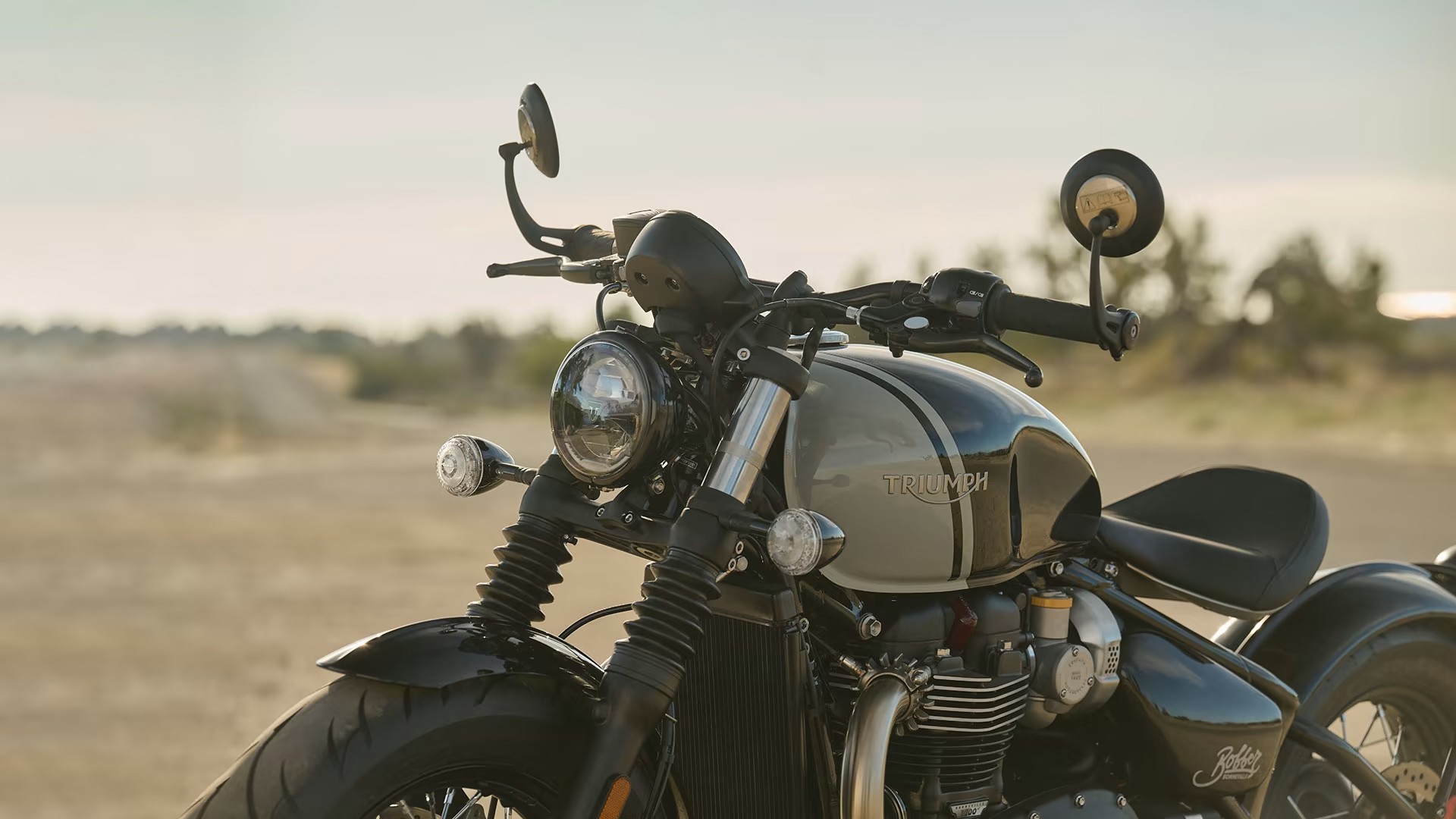
This was an incredibly difficult and personal decision. Our solicitor supported Jim throughout the process, helping him navigate both the legal claim and the emotional reality of the choice he faced. Ultimately, Jim decided to proceed with a below-knee amputation — a decision he now says was the right one for him. With compensation in the region of £1,000,000, Jim has been able to rebuild his life and remain part of the motorcycling world. Today he rides a heavily modified Triumph Bobber — not because the bike needs modifying, but because, as Jim says, that’s just what he does.
CASE INSIGHT
Sometimes the hardest decision — like amputation — can ultimately lead to the best quality of life.